

What’s the Difference in Drivetrains?
Author: Toby Date Posted:22 August 2025
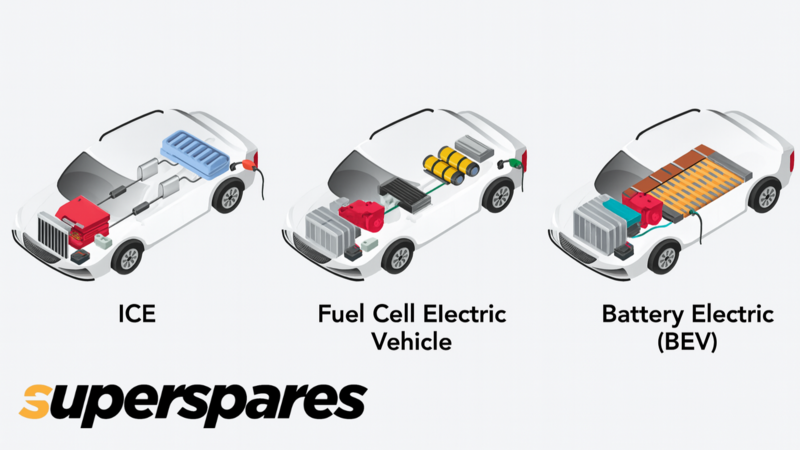

Car tech is moving fast — and Australia’s buying habits are proof. In just the first half of 2025, over 25,000 plug-in hybrids (PHEVs) were sold nationwide, marking a 210% increase year-on-year. That’s no small shift. Brands like BYD have skyrocketed into the mainstream, with the Shark 6 ute becoming the country’s best-selling PHEV and even cracking the top 15 for all vehicles sold.
What does it all mean? Aussies aren’t just choosing between petrol and electric anymore — there’s a growing mix of drivetrains competing for your next driveway spot. Whether you're sticking with the time-tested internal combustion engine (ICE), considering a hydrogen-powered fuel cell vehicle, or already zipping around in a battery electric vehicle (BEV), each has its own advantages (and trade-offs).
So, how do they work — and which one’s right for you? Let’s take a look under the bonnet and break down what sets each drivetrain apart.
ICE vs Fuel Cell vs Electric
Internal Combustion Engine (ICE)
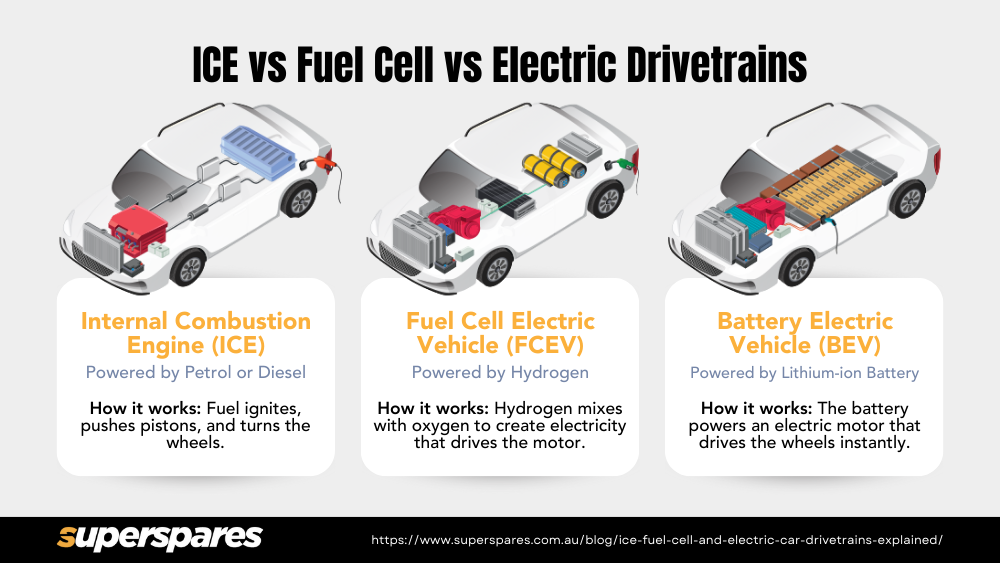
ICE vehicles are your classic petrol or diesel-powered cars — this tech has been around since the late 1800s. It works by igniting fuel and air in the engine’s cylinders, creating controlled explosions that push pistons and turn the wheels. It’s mechanical, loud, and full of moving parts — which also means there’s more that can go wrong.
Why it's familiar:
Most of us grew up with ICE vehicles, and they’re still the most common on Aussie roads today. They're easy to refuel, there's loads of infrastructure, and they're generally cheaper upfront.
Popular ICE vehicles:
- Toyota Hilux – Australia’s top-selling ute, diesel-powered and built for tough work.
- Ford Ranger – A tradie favourite with serious towing capacity.
- Toyota Corolla – One of the most reliable petrol-powered daily drivers around.
- Mazda CX-5 – Popular midsize SUV with petrol and diesel options.
Cons:
They burn fossil fuels, meaning higher emissions and more maintenance (like spark plugs, oil changes, and timing belts).
Fuel Cell Vehicles (FCEV)
Fuel cell vehicles are the newest kid on the block. While the concept dates back to the 1800s, real-world automotive use only gained traction in the past two decades. FCEVs use hydrogen to create electricity onboard, powering the vehicle with zero tailpipe emissions — just water vapour.
Why it's interesting:
You get the clean tailpipe (only water vapour comes out) and quick refuelling times, similar to petrol stops. They're also surprisingly quiet and smooth to drive.
Examples of FCEVs (though not yet that common):
- Toyota Mirai – One of the first hydrogen sedans to reach production.
- Hyundai NEXO – A hydrogen-powered SUV with impressive range.
- Honda Clarity Fuel Cell – Offered in overseas markets.
Cons:
Hydrogen refuelling stations are rare — especially in regional Australia. Plus, producing and transporting hydrogen at scale is still a challenge, so it's not widely available just yet.
Battery Electric Vehicles (BEV)
Electric cars might seem new, but they’ve been around in some form since the early 1900s — it’s just the tech finally caught up. Thanks to massive leaps in battery and motor efficiency, modern EVs now offer great range, low running costs, and minimal servicing.
Why it's booming:
EVs have lower running costs, zero emissions, and require less maintenance (no oil changes or exhaust issues). With more Aussie charging infrastructure popping up, they’re becoming a viable option for city and long-distance drivers alike.
Popular BEVs:
- Tesla Model 3 – Leading the EV push with strong performance and range.
- BYD Atto 3 – A budget-friendly electric SUV gaining serious traction.
- Hyundai Ioniq 5 – Known for retro looks and fast charging.
- MG ZS EV – One of Australia’s most affordable EVs.
- Kia EV6 – Sleek design and loaded with tech.
Cons:
Charging can take time, especially on standard outlets. And if you’re towing or heading off-road, range anxiety is still a real thing unless you're near a fast charger.
Which Drivetrain is Right for You?
It really depends on your driving habits. City drivers who want to cut back on fuel costs might lean towards BEVs. If you love a road trip or live in an area with limited charging options, ICE still holds up. And while fuel cells aren't mainstream yet, they might be part of the solution down the track — especially for heavy-duty vehicles or fleet use.
Superspares Has You Covered
No matter what you drive — petrol, diesel, or electric — Superspares is your go-to auto parts online shop. We stock performance upgrades, maintenance parts, accessories, and protection gear for everything from daily commuters to 4WD rigs. Whether you're keeping your ICE engine running smooth or exploring EV upgrades, we've got the gear to back you up.
Shop online and get fast delivery across Australia — because whatever powers your ride, it deserves top-notch care.

