

Choosing the Right Coolant for Your Car
Author: Toby Date Posted:11 September 2026
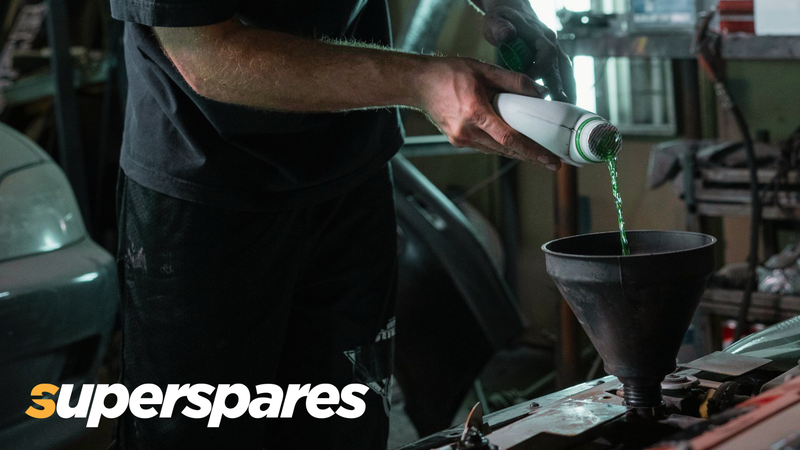

Find the right coolant with the Superspares Rego Search. Click “ADD VEHICLES” at the top of the page and enter your rego details to find coolants suited to your vehicle.
Choosing the correct coolant matters. The wrong type can contribute to corrosion, deposits, overheating, and premature cooling system wear. With different formulations, colours, and specifications available, knowing what your vehicle requires can help you make the right choice.
What Does Engine Coolant Actually Do?
Engine coolant circulates between the engine and radiator, absorbing excess heat and helping keep the engine within its intended operating temperature.
A quality coolant also helps:
- Protect against overheating
- Provide protection in freezing conditions
- Reduce corrosion inside the cooling system
- Protect components such as the radiator and water pump
- Reduce deposits within coolant passages
This makes coolant important throughout the year, not just during scorching Aussie summers.
Check Your Car’s Manual
The most important factor when choosing coolant isn't the brand or colour. It's whether the coolant meets the specification required by your vehicle manufacturer.
Check your owner's manual or manufacturer specifications for information such as the required coolant type, applicable standards and recommended replacement intervals.
Different vehicles can require different coolant chemistries, so don't assume a coolant that worked in your previous car is suitable for your current one.
Understanding Different Coolant Types
You'll commonly encounter several coolant technologies when shopping for a replacement.
| Coolant Type | General Characteristics |
|---|---|
| IAT | Traditional inorganic additive technology commonly associated with some older vehicles |
| OAT | Organic acid technology designed to provide longer-lasting corrosion protection |
| HOAT | Hybrid technology combining organic and inorganic corrosion inhibitors |
| Si-OAT | Uses organic acid technology combined with silicate-based protection and is specified for some modern vehicles |
The terminology can vary between coolant manufacturers. Rather than selecting solely by technology name, always confirm that the product meets your vehicle manufacturer's required specification.
Don't Choose Coolant Based on Colour
Coolant colours can help manufacturers distinguish between products, but there is no universal colour standard that guarantees two coolants use the same chemistry or meet the same vehicle specifications.
Two coolants that look almost identical may have different additive packages, while coolants of different colours may sometimes meet the same specification.
Treat colour as a visual reference, not as your primary compatibility check.
Premix vs Concentrate
Coolant is generally available as either premixed coolant or concentrate.
Premixed Coolant
Premix comes ready to pour at the manufacturer's specified dilution. It's convenient for servicing and topping up because there's no measuring or additional water required.
Coolant Concentrate
Concentrate needs to be mixed with the correct amount and quality of water before use. A 50:50 coolant-to-water mixture is common for many products, but this isn't a universal rule.
If you're using concentrate, follow the coolant manufacturer's mixing instructions and your vehicle's requirements. Don't assume that adding more concentrate automatically provides better protection.
How Much Coolant Does Your Car Need?
Coolant capacity can vary considerably between vehicles. For example, some Toyota Corolla variants may have a cooling-system capacity of around 5 to 7 litres, while a larger Toyota Land Cruiser can require 10 litres or more, depending on the engine and model.
These figures are only a general guide. Always check your owner's manual or manufacturer specifications for the exact capacity of your vehicle. Also keep in mind that a simple top-up requires far less coolant than a complete drain, flush, and refill.
Quick Coolant Selection Checklist
Before buying coolant, check these five things:
- Vehicle specification - Does the coolant meet the manufacturer's required specification?
- Coolant technology - Is the formulation appropriate for your vehicle?
- Premix or concentrate - Do you need a ready-to-use product or one that requires dilution?
- Compatibility - Is it safe to mix with the coolant already in the system?
- Quantity - Do you have enough for the required top-up or coolant change?
If you're unsure about any of these, checking the vehicle manufacturer's requirements is safer than choosing based on packaging or colour.
Signs Your Coolant Needs Attention
Never wait for the temperature gauge to climb into the red before checking your cooling system.
Low coolant levels, visible leaks, contaminated or discoloured coolant, repeated overheating, or a coolant warning light can all indicate that something needs attention. If you've spotted fluid underneath your vehicle but aren't sure where it's coming from, check out our Car Fluid Leak Colours 101 to help identify different automotive fluids by their colour.
If the coolant level keeps dropping after being topped up, don't simply keep adding more. A leaking hose, radiator, water pump, reservoir, gasket, or another cooling-system fault may need to be diagnosed.
Safety tip: Never remove a radiator or pressurised coolant-system cap while the engine is hot. Hot coolant can be released under pressure and cause serious burns.
Choose the Right Coolant with Superspares
The best coolant isn't simply the most expensive bottle or the one that's the same colour as what's already in your reservoir. The right choice is a coolant that meets your vehicle manufacturer's specifications and is used at the correct concentration.
For coolants, filters, service parts, cooling-system components, and other maintenance essentials, Superspares is an Australian online auto parts store with options for passenger cars, performance vehicles, and 4WDs. Check your vehicle requirements, choose the correct product, and keep your cooling system ready for everything from the daily commute to long-distance touring.

Written by Toby Martin
Automotive Content Specialist
FAQs
How do I know which coolant my car needs? +
Start by checking your owner's manual for the coolant type and manufacturer specification required for your vehicle. You can also use the Superspares Rego Search by clicking “ADD VEHICLES” at the top of the page and entering your rego details to narrow down suitable products.
Does coolant colour matter? +
Coolant colour can help identify a product, but it shouldn't be used as the main way to determine compatibility. There is no universal colour standard, so two coolants of the same colour may use different formulations or meet different specifications.
Can I mix different types of coolant? +
Avoid mixing different coolants unless the manufacturer specifically confirms they are compatible. Different coolant chemistries and additive packages may not work properly together. If you're unsure what's currently in the cooling system, check your service history or seek professional advice.
What's the difference between premixed and concentrated coolant? +
Premixed coolant is already diluted to the manufacturer's specified ratio and is ready to use. Concentrated coolant needs to be mixed with the appropriate amount and quality of water before being added to the cooling system.
Can I use tap water instead of coolant? +
Water alone doesn't provide the same corrosion, freezing and boiling protection as the correct coolant mixture. In normal servicing, use the coolant type and concentration specified by your vehicle manufacturer rather than replacing it with plain water.
How often should engine coolant be changed? +
Coolant replacement intervals vary depending on the vehicle and coolant formulation. Some modern long-life coolants are designed for extended service intervals, while other formulations require more frequent replacement. Follow the interval specified in your owner's manual or manufacturer service schedule.
How much coolant does my car need? +
Cooling-system capacity depends on the vehicle, engine and model variant. A small passenger car can require considerably less than a large 4WD or diesel. Check your owner's manual or manufacturer specifications for the exact capacity, particularly if you're performing a complete drain and refill.
Can using the wrong coolant damage my engine? +
Using an incompatible coolant can reduce corrosion protection and potentially contribute to deposits, cooling-system corrosion, overheating and premature component wear. Always select coolant based on the manufacturer's required specification rather than brand or colour alone.
Can I top-up the coolant myself? +
A coolant top-up can be relatively straightforward if you have the correct product and follow your vehicle manufacturer's instructions. Always allow the engine to cool completely before opening a pressurised cooling system. If the coolant level repeatedly drops, have the vehicle inspected for a possible leak rather than continuing to top it up.

