

Different Types of Drive Belts
Author: Toby Date Posted:30 September 2026
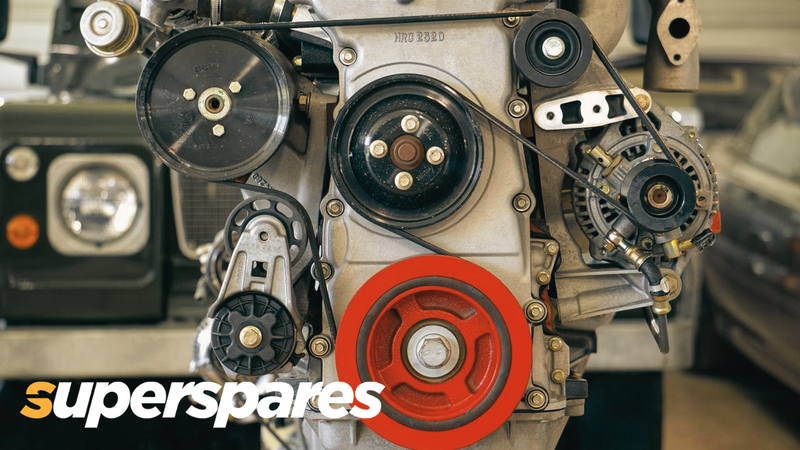

Drive belts might not be the first components you think about when looking under the bonnet, but they play an important role in keeping your car running properly. Depending on the vehicle, these belts can help operate everything from the alternator and power steering pump to the air conditioning compressor and, in some engines, the water pump.
There are several types of automotive drive belts, and knowing the differences can make maintenance and replacement a lot easier. Here's a breakdown of the main types you're likely to come across.
What Are the Main Types of Drive Belts?
Automotive belt systems generally use a few common belt designs.
These include:
- V-belts
- Serpentine or multi-rib belts
- Stretch-fit belts
- Cogged V-belts
- Timing or toothed belts
Flat and round belts also exist, but they're much more common in industrial machinery than modern passenger vehicles.
1. V-Belts
V-belts are a traditional type of automotive drive belt found on many older vehicles, such as 1988–1997 Toyota Hilux models with the 2.4L 22R petrol engine.
They have a trapezoidal cross-section shaped like the letter V, which fits into a matching groove in the pulley. As the belt is tensioned, its sidewalls grip the pulley and transfer power to accessories such as the alternator, power steering pump, or air-conditioning compressor.
*Exact V-belt applications vary by model year, engine, and accessory configuration.
Where Are V-Belts Used?
V-belts are particularly common on older vehicles, although they're still used in some modern applications.
A vehicle may have separate belts operating components such as:
- Alternator
- Power steering pump
- Water pump
- Air conditioning compressor
Instead of one belt controlling everything, there may be two or three individual belts across the front of the engine.
| Advantages of V-Belts | Disadvantages of V-Belts |
|---|---|
|
|
2. Serpentine Belts
Serpentine belts are widely used on modern vehicles, including models such as the 2012–2017 Toyota Camry with the 2.5L 2AR-FE petrol engine.
They're also commonly called:
- Multi-rib belts
- Poly-V belts
- Ribbed belts
Instead of having a V-shaped cross-section, a serpentine belt has multiple narrow ribs running along its length. These ribs fit into matching grooves in the pulleys, allowing the belt to drive multiple engine accessories efficiently.
*Exact belt applications can vary by model year, engine, and accessory configuration.
Why Is It Called a Serpentine Belt?
The name comes from the way the belt snakes around several engine pulleys.
One serpentine belt can potentially operate the:
- Alternator
- Air conditioning compressor
- Power steering pump
- Water pump
- Other accessory pulleys
This allows manufacturers to replace several individual V-belts with one compact drive system.
| Advantages of Serpentine Belts | Disadvantages of Serpentine Belts |
|---|---|
|
|
3. Stretch-Fit Belts
Stretch-fit belts, sometimes called elastic belts, are used on some modern vehicles, including certain 2011–2018 Ford Focus models with the 2.0L petrol engine.
Unlike conventional belt systems, stretch-fit belts don't necessarily use a separate tensioner. The belt itself is designed to stretch slightly during installation and maintain the correct operating tension once fitted.
They're commonly used to drive individual accessories such as air-conditioning compressors.
*Exact belt applications can vary by model year, engine, and accessory configuration.
What Makes Stretch-Fit Belts Different?
Stretch-fit belts require a specific installation procedure.
Trying to lever the belt onto the pulley with a screwdriver or similar tool can damage the belt fibres or pulley.
Some applications require a dedicated installation tool that guides the belt over the pulley as the engine is rotated manually.
Once removed, many stretch-fit belts shouldn't be reused.
4. Cogged V-Belts
Cogged V-belts are a variation of the traditional V-belt and can be found on vehicles such as certain 1990–1997 Toyota Land Cruiser 80 Series models with the 4.5L 1FZ-FE petrol engine.
Instead of having a completely solid inner surface, the belt has moulded notches or cogs across the inside. These cogs don't normally mesh with pulley teeth like a timing belt. Their main purpose is to improve belt flexibility.
This allows the belt to bend more easily around smaller pulleys while generating less heat from repeated flexing. Cogged V-belts can be useful in tighter pulley arrangements where a conventional V-belt may be less flexible.
*Exact belt applications can vary by model year, engine, and accessory configuration.
5. Timing Belts and Toothed Belts
Timing belts are toothed belts used on vehicles such as certain 2000–2007 Toyota Land Cruiser 100 Series models with the 4.2L 1HD-FTE turbo-diesel engine.
Unlike most accessory drive belts, timing belts don't rely primarily on friction. Their teeth engage with matching teeth on the crankshaft and camshaft sprockets, keeping these rotating components correctly synchronised and preventing normal belt slippage.
*Exact timing belt applications and replacement intervals can vary by model year and engine.
Timing Belts Aren't the Same as Accessory Drive Belts
Timing belts are sometimes grouped into discussions about drive belts, but they perform a very different job.
An accessory drive belt operates external engine accessories. A timing belt synchronises the rotation of the crankshaft and camshaft so the engine's valves operate at the correct time.
Timing belt failure can cause serious engine damage in certain engine designs, particularly interference engines.
Because of this, timing belts normally have specific replacement intervals based on kilometres, time or both. Always follow the vehicle manufacturer's servicing requirements.
How Do Drive Belt Tensioners Work?
Modern serpentine belt systems commonly use an automatic belt tensioner. The tensioner applies consistent pressure to the belt as it travels around the pulleys.
An idler pulley may also be used to guide the belt and maintain the correct routing.
When replacing a worn belt, it's worth checking the entire system rather than looking at the belt alone. A damaged tensioner, worn bearing or misaligned pulley can cause a new belt to wear prematurely.
Signs of tensioner or pulley problems can include:
- Squealing or chirping noises
- Belt vibration
- Uneven belt wear
- Visible pulley wobble
- Belt tracking incorrectly across the pulley
Replacing the belt without fixing the underlying problem may only provide a temporary solution.
What Causes Drive Belts to Wear Out?
Drive belts operate in a demanding environment. They're exposed to engine heat, constant movement and thousands of operating cycles every time you drive.
Normal ageing is one of the main causes of wear, but belt life can also be affected by oil or coolant contamination, incorrect tension, damaged pulleys, misalignment and worn tensioners.
Australian driving conditions can add another variable. High under-bonnet temperatures, long-distance driving, towing and dusty conditions can all place additional demands on engine components.
Signs Your Drive Belt May Need Replacing
Drive belt problems don't always result in immediate failure. There are often warning signs beforehand.
Look out for symptoms such as:
- Squealing or chirping from the engine bay
- Cracks or damaged ribs
- Fraying around the belt edges
- Missing sections of belt material
- A shiny or glazed belt surface
- Belt slipping
- Battery warning light
- Reduced power steering assistance on applicable vehicles
- Air conditioning that suddenly stops operating
Modern EPDM belts don't always develop obvious cracks as they wear, so visual inspection alone may not tell the whole story. Belt condition, mileage, tension and manufacturer recommendations should all be considered.
How Often Should You Replace a Drive Belt?
There isn't one replacement interval that applies to every car.
Service life depends on the belt material, vehicle design, engine operating conditions and manufacturer requirements. Some belts can remain serviceable for many tens of thousands of kilometres, while others may need attention sooner due to age, contamination or problems elsewhere in the drive system.
Your owner's manual and vehicle service schedule should be the starting point.
It's also worth having the belt inspected during routine servicing, particularly before a long road trip or if you've noticed unusual noises from the engine bay.
Choosing the Correct Drive Belt
Getting the right belt involves more than finding something that's roughly the same length.
The replacement belt needs to match the vehicle's specifications, including its:
- Length
- Width
- Rib configuration
- Belt profile
- Application
- Tensioning system
Vehicle make, model, year and engine variant can all affect compatibility. Two cars from the same model range may use different belts depending on the engine or accessories fitted.
Checking vehicle fitment information before ordering can save a lot of frustration when it's time to install the part.
Keep Your Engine Accessories Running Properly
Drive belts are relatively simple components, but they're responsible for keeping some pretty important systems operating. Understanding the difference between serpentine belts, V-belts, multi-rib belts and stretch-fit belts makes it easier to identify what your vehicle uses and recognise when something isn't right.
If your belt is noisy, damaged or approaching its recommended replacement interval, don't leave it until it snaps. Check the belt itself as well as the tensioners and pulleys that support the drive system.
When it's time to replace worn components, Superspares is an Australian car parts store offering drive belts, timing belts, belt tensioners, timing chains, pulleys and other related engine parts. With options for passenger cars, performance vehicles and 4WDs, you can find the components you need to keep your engine and accessories running properly.

Written by Toby Martin
Automotive Content Specialist

