

Fuel Efficiency Tips in 2026
Author: Toby Date Posted:14 April 2026


Fuel prices across Australia have surged in recent times, driven by events in the Middle East and supply disruptions affecting oil production and distribution. In some cases, petrol prices have climbed to around $2.30-$2.40 per litre, while diesel has pushed past $3.00 per litre in parts of the country.
These increases impact everyday drivers, small businesses, and entire industries that rely on transport, with fuel costs rising by 30-40% in a short period during major supply disruptions.
With fuel now taking up a bigger share of running costs, improving fuel efficiency has become more important than ever. While you can’t control global fuel prices, you can control how efficiently your car uses fuel. Small changes in driving habits, maintenance, and parts selection can make a noticeable difference over time.
Key Takeaways
- Higher fuel costs also impact the price of goods, transport, and everyday living.
- Driving habits matter most: Aggressive driving can increase fuel use by up to 20–30%, while smoother driving significantly reduces consumption.
- Maintenance plays a key role: Issues like low tyre pressure, dirty oil, or clogged filters can increase fuel usage by 3–10% or more.
- Replacing worn parts improves efficiency: Components like air filters, spark plugs, and oxygen sensors help restore optimal fuel use.
- Combined improvements deliver real gains: Better driving habits plus proper maintenance can achieve a 15–30% overall fuel efficiency improvement.
- Real-world savings: Fuel consumption could drop from 8L/100km to around 5.6–6.8L/100km, saving approximately $300–$600+ per year.
Why Fuel Efficiency Matters More Than Ever
With petrol and diesel prices fluctuating due to global factors, even small improvements in fuel economy can add up. Saving just a few litres per tank can mean hundreds of dollars saved each year, especially for daily drivers or long-distance commuters.
It’s also not just about fuel efficiency, but efficiency in general. Rising fuel costs don’t only affect what you pay at the bowser. They flow through to the cost of goods, transport, and everyday services, since most products rely on fuel at some stage of delivery. When fuel prices rise, so does the cost of living.
Improving fuel efficiency helps offset these broader cost pressures, while also reducing engine strain and keeping your vehicle running more smoothly.
Where You Can Improve Fuel Efficiency and Save More
Driving Habits |
Maintenance |
Parts |
|---|---|---|
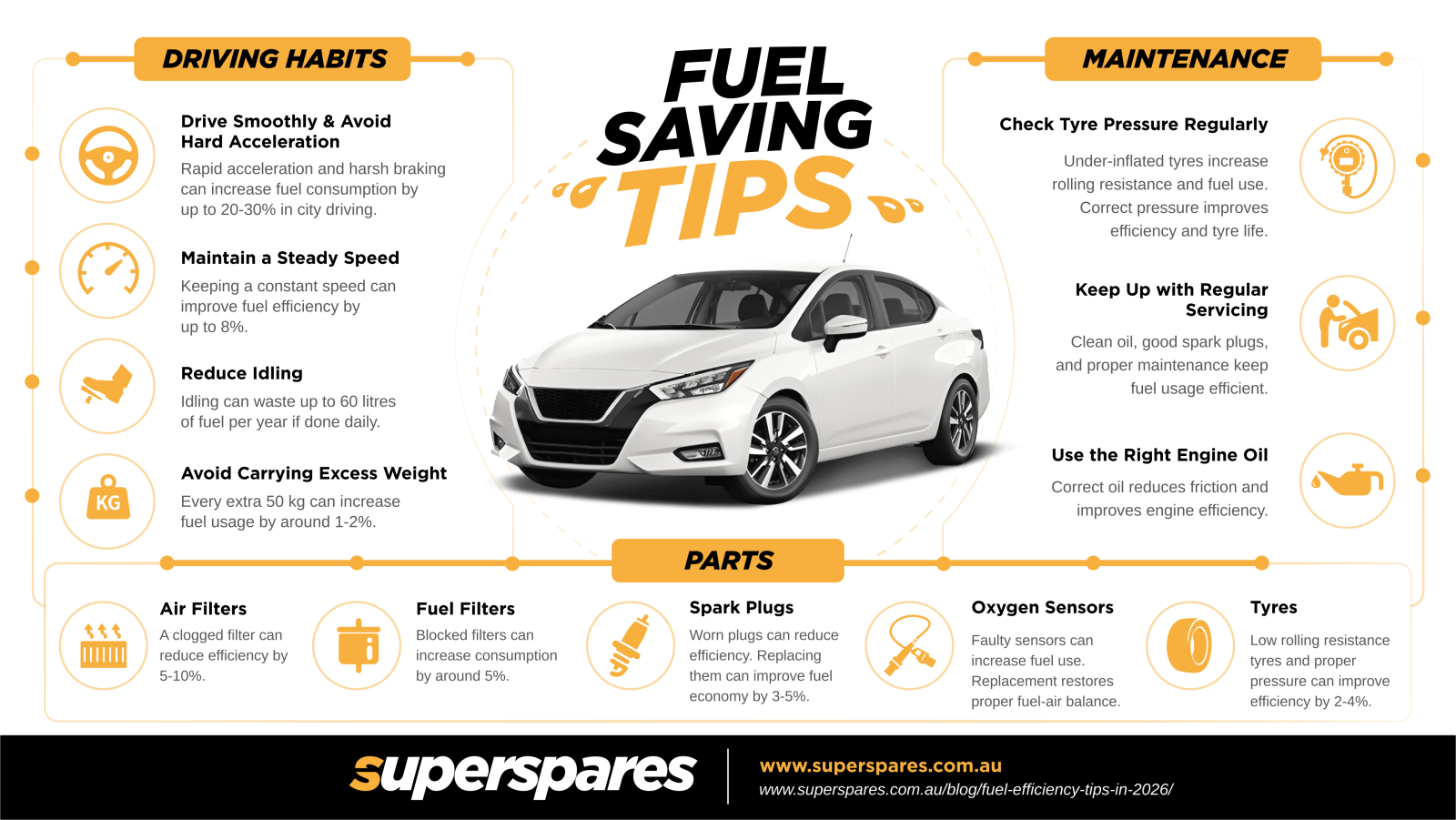
| Drive Smoothly and Avoid Hard Acceleration Rapid acceleration and harsh braking can increase fuel consumption by up to 20–30% in city driving. Smooth throttle input helps maintain efficiency. |
Check Tyre Pressure Regularly Under-inflated tyres increase rolling resistance and fuel use. Correct pressure improves efficiency and tyre life. |
Air Filters A clogged filter can reduce efficiency by 5–10% by restricting airflow to the engine. |
| Maintain a Steady Speed Keeping a constant speed can improve fuel efficiency by up to 8%, especially on highways. |
Keep Up with Regular Servicing Clean oil, good spark plugs, and proper maintenance keep fuel usage efficient. |
Fuel Filters Blocked filters restrict fuel flow and can increase consumption by around 5%. |
| Reduce Idling Idling can waste up to 60 litres of fuel per year if done daily. |
Use the Right Engine Oil Correct oil reduces friction and improves engine efficiency. |
Spark Plugs Worn plugs reduce efficiency. Replacing them can improve fuel economy by 3–5%. |
| Avoid Carrying Excess Weight Every extra 50 kg can increase fuel usage by around 1–2%. |
Oxygen Sensors Faulty sensors can increase fuel use. Replacement restores proper fuel-air balance. |
|
| Tyres Low rolling resistance tyres and proper pressure can improve efficiency by 2–4%. |
Is It Worth Spending on Parts to Save Fuel?
It might seem counterintuitive to spend money on parts just to save on fuel, but in many cases, it balances out over time. For example, replacing worn components like air filters or spark plugs can improve fuel efficiency by around 5–10%, which could save roughly $100–$200 per year depending on how much you drive.
When you factor in better driving habits, such as smoother acceleration and maintaining steady speeds, you can gain an additional 10–20% improvement. Combined, that’s a potential 15–30% overall reduction in fuel consumption.
In real terms, a car using 8L/100km could drop closer to 5.6–6.8L/100km, translating to $300–$600+ in annual fuel savings for regular drivers.
The key is focusing on maintenance rather than unnecessary upgrades. Replacing worn or inefficient parts helps restore your vehicle to its optimal condition, rather than adding extra costs without real benefit. In most cases, you’re not spending more, you’re simply avoiding wasted fuel and higher running costs in the long run.
Plan Your Trips Smarter
Short trips with a cold engine tend to use more fuel. Combining errands into one trip reduces engine warm-up cycles and improves overall efficiency.
Using navigation apps to avoid heavy traffic can also help reduce time spent idling and stop-start driving.
Small Changes Add Up
Fuel efficiency isn’t about one big change. It’s about a combination of driving habits, regular maintenance, and using the right parts. Even small improvements can make a noticeable difference over time, especially with current fuel prices.
Keep Fuel Costs Down with Superspares
Improving fuel efficiency starts with using the right parts and keeping your vehicle in top condition. Superspares makes it easy to find air filters, spark plugs, fuel system components, and more for passenger cars, performance vehicles, and 4WDs.
As a trusted Australian online auto parts store, we stock quality parts that help keep your engine running efficiently and your fuel costs under control.

Written by Toby Martin
Automotive Content Specialist

