

Fuel Injector Buying Guide
Author: Toby Date Posted:5 October 2026
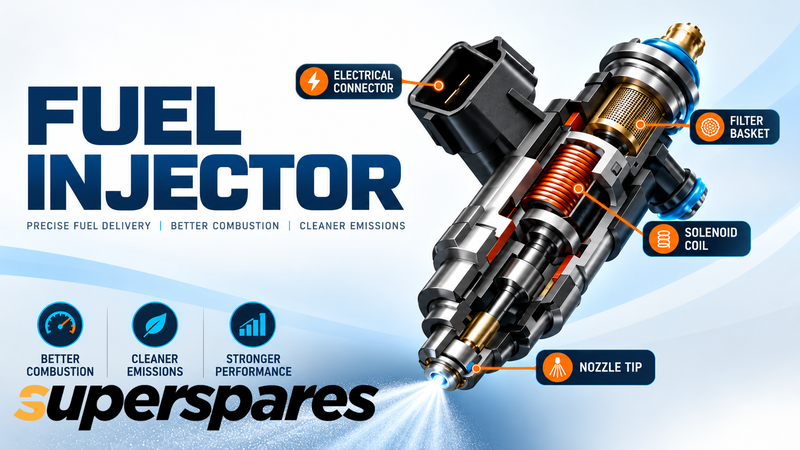

A rough idle, sluggish acceleration or worsening fuel economy can all point to a fuel injector that's seen better days.
Replacing it isn't as simple as grabbing one that looks about right. The wrong injector can cause more headaches than it solves, so getting the correct fit for your engine and fuel system matters. This guide covers what to check before you buy.
What Does a Fuel Injector Do?
A fuel injector is an electronically controlled valve that delivers fuel into the engine at precisely timed intervals. The engine management system controls when each injector opens and how much fuel it supplies based on factors such as engine speed, load and temperature.
Think of it like a precisely controlled spray nozzle, opening at just the right moment and delivering only as much fuel as the engine needs.
Petrol engines may use port fuel injection, where fuel is sprayed into the intake port, or direct injection, where fuel goes directly into the combustion chamber. Diesel engines also use direct injection but operate at much higher fuel pressures.
That's why fuel injectors aren't universal. You need an injector designed for your particular engine and fuel system.
Signs You May Need New Fuel Injectors
A dirty, clogged or failing injector can interfere with how your engine runs. Common symptoms include:
- Rough or unstable idle
- Engine misfires
- Hesitation during acceleration
- Difficult starting
- Poor fuel economy
- Reduced engine performance
- Fuel smells
- Check engine light
Don't automatically blame the injectors, though. Spark plugs, ignition coils, fuel pumps and sensors can produce similar symptoms. Proper diagnosis can save you from replacing perfectly good parts.
How to Choose the Right Fuel Injector
Start with your vehicle details. Make, model and year aren't always enough, as one model can be available with several engines and fuel systems.
Before buying, check:
| What to Check | Why It Matters |
|---|---|
| Make, model and year | Narrows down vehicle fitment |
| Engine size and code | Different engines may use different injectors |
| Fuel type | Petrol and diesel injectors are different |
| Injection system | Port and direct injection use different designs |
| Part number | Helps match the original injector |
| Connector | Must suit the vehicle's electrical system |
| Flow rate | Important for factory and modified engines |
For a standard engine, an OE-specification replacement injector is generally the simplest choice.
Petrol vs Diesel Fuel Injectors
Petrol and diesel injectors have the same basic purpose, but they're designed for very different operating conditions.
Port-injected petrol engines spray fuel into the intake before it enters the combustion chamber. Direct-injection petrol engines inject it straight into the cylinder at higher pressure.
Modern common-rail diesel injectors operate under extremely high pressure and require very precise fuel delivery. They shouldn't be confused with petrol injectors just because the components perform a similar job.
The takeaway? Know your engine and injection system before ordering.
Should You Replace One Injector or All of Them?
One failed injector doesn't automatically mean you need a complete set.
If testing confirms that only one injector is faulty and the others are performing correctly, replacing the individual injector may be enough.
For an older or high-kilometre engine, however, the remaining injectors may have experienced similar wear or contamination. In that situation, testing the full set can help determine whether replacing multiple injectors makes more sense.
Standard vs Performance Fuel Injectors
For an otherwise standard car, factory-specification injectors are usually all you need.
Performance injectors become relevant when engine modifications significantly increase fuel demand. This may include:
- Turbocharger or supercharger upgrades
- Increased boost
- Major engine modifications
- High-output engine builds
- Certain alternative fuel setups
Performance injectors generally offer a higher flow rate, allowing them to supply more fuel when required.
But bigger isn't automatically better. Oversized injectors fitted to an engine that doesn't need them can create tuning and drivability problems. If you're upgrading injectors for performance, they should form part of a properly planned fuel-system and ECU tuning setup.
What Does Injector Flow Rate Mean?
Performance injectors are commonly rated by flow rate, often expressed in cc/min, or cubic centimetres per minute.
Put simply, a higher number means the injector can deliver more fuel over a given period.
The correct size depends on factors such as engine power, fuel pressure, fuel type, number of injectors and the amount of fuel your engine requires under maximum load.
If you're building a modified engine, don't simply grab the highest-flowing injector you can find. Injector sizing should match the engine's actual fuel requirements.
Don't Forget the Rest of the Fuel System
Your injectors can only work with the fuel they're supplied.
If you're diagnosing an injector problem, it's worth checking related components such as the fuel filter, fuel pump, pressure regulator, fuel lines and injector seals.
This is especially important on modified vehicles. Installing larger injectors won't help much if the existing fuel pump can't supply enough fuel to keep up.
Fuel Injector Brands
Once you know the type of injector you need, you'll find several brands to choose from. At Superspares, the range includes options for everyday replacements, diesel applications and injector servicing.
| Brand | What You'll Find |
|---|---|
| AFI | Individual replacement fuel injectors covering a range of vehicle applications |
| Bosch | Petrol fuel injectors and common-rail diesel injectors, including single injectors and multi-piece sets |
| Goss | Injector service kits and seals for maintaining or repairing existing injector setups |
| PAT | Replacement fuel injectors plus injector service kits across various vehicle applications |
There's no need to pick a brand by name alone. Start with what fits your engine, then compare the available brands, injector type and whether you need a single injector, complete set or simply a service kit.
Fuel Injector Buying Checklist
Before hitting the order button, double-check:
- Vehicle - Make, model and build year
- Engine - Capacity and engine code
- Fuel - Petrol or diesel
- Injection system - Port or direct injection
- Part number - Compare it with the original where possible
- Connector - Confirm electrical compatibility
- Flow rate - Match the engine's requirements
- Seals - Check whether O-rings and installation hardware are included
A few minutes spent checking these details can save plenty of frustration once the bonnet is up.
Find the Right Fuel Injectors for Your Car
Choosing the right fuel injectors comes down to matching them with your engine, fuel system and intended use. Standard vehicles generally need the correct OE-specification replacement, while modified engines may require higher-flow injectors and supporting fuel-system upgrades.
When your fuel system needs attention, Superspares is an Australian online auto parts store where you can shop fuel-system components alongside service parts, performance upgrades, accessories and other automotive products for passenger cars, performance vehicles and 4WDs.

Written by Toby Martin
Automotive Content Specialist

