

How to Convert Drum Brakes to Disc Brakes
Author: Toby Date Posted:8 May 2026
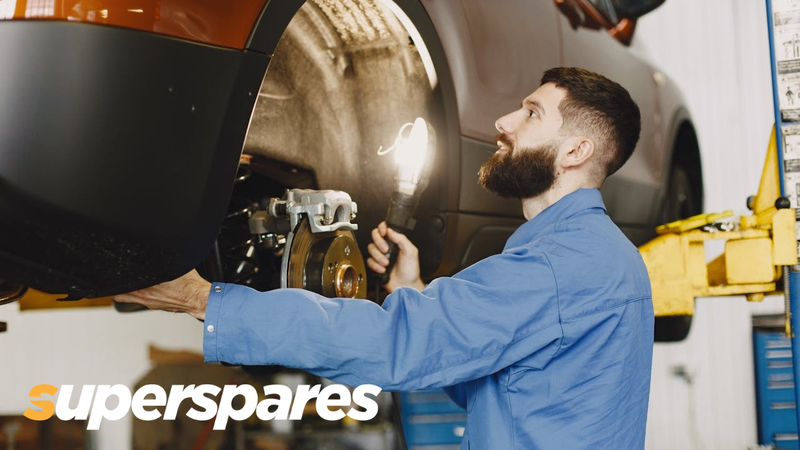

Drum brakes were once standard on many vehicles, particularly on the rear axle. While they still work well for everyday driving, disc brakes are generally more efficient, easier to service, and better at handling heat. That’s why many drivers consider converting their drum brakes to disc brakes.
Today, around 80–90% of newer passenger cars use disc brakes on all four wheels, though some smaller or entry-level models still use rear drums because they are cheaper to produce.
Because of this, some drivers look into converting drum brakes to discs. In many cases the upgrade is possible, but it largely depends on whether conversion kits and compatible parts exist for your specific vehicle.
Key Takeaways
- Disc brake conversions are often possible, but it depends on whether a drum-to-disc conversion kit exists for your specific car model.
- Most modern vehicles already use disc brakes, with around 80–90% of newer passenger cars running discs on all four wheels.
- Drum brakes still appear on some smaller or entry-level cars because they are cheaper to manufacture and integrate easily with parking brake systems.
- Disc brakes handle heat better and are easier to service, which is why many drivers upgrade for improved braking consistency and maintenance convenience.
- The easiest way to know if your car can be converted is to search for a drum-to-disc conversion kit designed for your vehicle’s make, model, and year.
- A typical conversion involves replacing the drum assembly with rotors, calipers, mounting brackets, and new brake lines, followed by bleeding the brake system to ensure proper operation.
- Brake balance and safety are critical, so some conversions may also require upgrades such as a different master cylinder or proportioning valve
Drum Brakes vs Disc Brakes
Drum brakes use brake shoes that press outward against the inside of a rotating drum. Disc brakes use calipers that clamp brake pads against a rotating disc (or rotor). Because disc brakes are exposed to airflow, they tend to dissipate heat more effectively.
| Feature | Drum Brakes | Disc Brakes |
|---|---|---|
| Braking design | Shoes press outward against a drum | Pads clamp onto a rotating disc |
| Heat dissipation | Lower, heat can build up inside the drum | Better cooling due to open design |
| Maintenance | More components, harder to service | Easier pad replacement |
| Performance under heavy use | Can fade under repeated braking | More consistent braking performance |
| Cost | Generally cheaper to manufacture | Typically more expensive |
| Common placement | Often used on rear brakes | Used on front brakes and most modern vehicles |
For everyday driving, drum brakes can work perfectly well, particularly on the rear axle where braking loads are lower. However, disc brakes tend to perform better in demanding conditions such as towing, mountain driving, or performance use.
Why Some Cars Still Use Drum Brakes
Even on modern vehicles, rear drum brakes are still fairly common. Manufacturers often use them because they are:
- Cost-effective to produce
- Durable for everyday use
- Integrated with the parking brake system
For smaller passenger cars, drum brakes can still provide adequate braking performance. You’ll still find rear drum brakes on many popular everyday models such as the Toyota Yaris, Suzuki Swift, Mitsubishi Mirage, and some variants of the Hyundai i30 and Kia Rio, particularly in entry-level trims.
While these systems work well for normal driving, they are not as effective at dissipating heat compared to disc brakes, which is why higher-performance or heavier vehicles usually rely on discs.
Why Drivers Upgrade to Disc Brakes
Drivers often convert drum brakes to disc brakes to improve braking performance and simplify maintenance. Disc brakes dissipate heat more effectively, which helps maintain consistent braking during repeated stops or demanding driving conditions.
They are also easier to service, as replacing disc brake pads is generally quicker than working with drum brake components. For vehicles used for performance driving, towing, or regular highway use, rear disc brakes can offer more stable and consistent braking.
Can You Convert Drum Brakes to Disc Brakes on Any Car?
Technically, many vehicles can be converted, but not every car is a good candidate.
In practice, the key factor is simply whether a drum-to-disc conversion kit exists for your specific vehicle. The quickest way to find out is to browse for a drum-to-disc conversion kit using your exact car make, model, and year. If a kit is available, the conversion is generally possible because the required brackets, rotors, calipers, and mounting hardware have already been designed to fit that vehicle.
You can look for your car model in Superspares’ drum-to-disc brake conversion kits.
Older vehicles and popular enthusiast platforms tend to have better aftermarket support, while rare models or some economy cars may have limited options. Because of this, a bit of research is usually required.
How to Convert Drum Brakes to Disc Brakes
Converting drum brakes to disc brakes usually involves installing a drum-to-disc conversion kit designed for your vehicle. While the exact process varies by model, the general steps are fairly similar.
1. First, remove the existing drum brake assembly. This includes the brake drum, shoes, springs, wheel cylinder, and backing plate.
2. Next, install the conversion brackets or mounting plates that allow the new disc brake components to attach to the hub or axle housing.
3. Once the mounting hardware is in place, the brake rotor and caliper assembly can be installed. The rotor sits on the hub, while the caliper mounts to the bracket and holds the brake pads.
4. After that, the brake lines are connected to the new calipers. Some conversions may require different brake hoses or fittings to match the disc brake setup.
5. In many cases, the parking brake system also needs to be adapted, especially when converting rear brakes. Some kits include an integrated handbrake mechanism inside the rotor hat.
6. Finally, the braking system is bled to remove air from the lines, ensuring proper hydraulic pressure and braking performance.
Because brake systems are critical to safety, some conversions may also require a different master cylinder or proportioning valve to maintain correct brake balance.
Find the Right Brake Parts at Superspares
Whether you’re maintaining your current braking setup or planning a disc brake upgrade, choosing quality components is essential.
At Superspares, our online auto parts store offers brake pads, rotors, calipers, and braking upgrades for passenger cars, performance vehicles, and 4WDs across Australia. With trusted brands and parts matched to your vehicle, it’s easier to keep your braking system performing the way it should.

Written by Toby Martin
Automotive Content Specialist
FAQs
Are disc brakes always better than drum brakes? +
Not necessarily. Disc brakes handle heat better and perform more consistently under heavy use. Drum brakes still work well for everyday driving, especially on the rear axle.
Is it worth converting drum brakes to disc brakes? +
It can be, especially if you want better heat management and easier maintenance. Disc brakes usually provide more consistent braking during repeated stops. For everyday driving though, rear drum brakes can still work perfectly well.
Can any car be converted from drum brakes to disc brakes? +
Not always. The main factor is whether a drum-to-disc conversion kit exists for your specific make, model, and year. If a kit is available, the conversion is usually possible.
What’s involved in a drum-to-disc brake conversion kit? +
Most kits include rotors, calipers, brake pads, and mounting brackets. Some conversions may also require brake line adjustments, a parking brake solution, or upgrades like a master cylinder or proportioning valve.
How much does a drum-to-disc brake conversion cost? +
Costs vary widely. Many conversions range from a few hundred dollars to over $1,000, depending on the vehicle, parts required, and labour if installed by a workshop.
Can I convert drum brakes to disc brakes myself? +
If you have mechanical experience and the right tools, it’s possible. Because brakes are a critical safety system, many drivers prefer to have the conversion done or checked by a professional.

