

How to Prime Shock Absorbers
Author: Toby Date Posted:3 July 2026
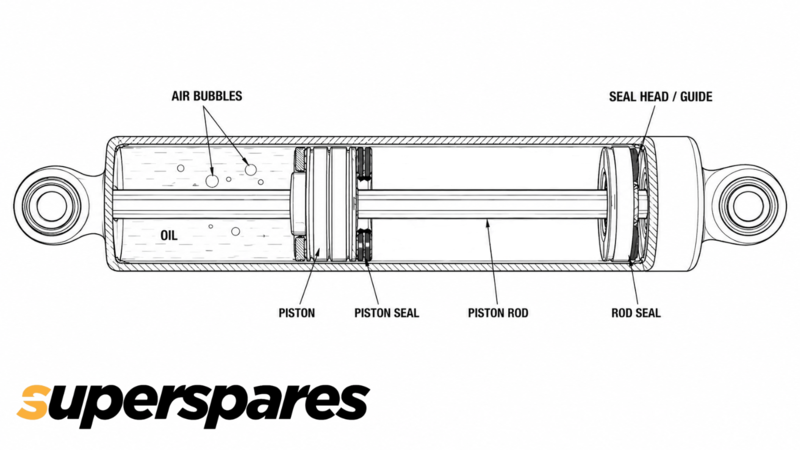

Installing new shock absorbers? Before they go on the vehicle, it’s a good idea to prime them first. It’s a simple step, but it can help the shock perform properly from the moment it’s fitted.
Priming is especially important for gas and hydraulic shock absorbers that may have been stored on their side during transport. A few slow compressions before installation can help move the oil and gas inside the shock back through the working chambers.
Key Takeaways
- Prime shock absorbers before installation: Priming helps new shocks perform smoothly from the moment they are fitted.
- Storage affects internal fluid: Oil and gas can settle inside new shock absorbers during storage or transport, particularly if they have been lying flat.
- Use the correct priming method: Hold the shock upright and slowly compress and extend it around 3–5 times before installation.
- Check for smooth operation: A properly primed shock should move smoothly and consistently throughout its full stroke without hesitation.
- Avoid common mistakes: Don't rush the process, lay the shock flat after priming, or install shocks that feel uneven or inconsistent.
- Prime immediately before fitting: Whether installing standard replacement shocks, performance dampers, or 4x4 suspension components, priming is best done just before installation.
Why You Should Prime Shock Absorbers
New shock absorbers can sit in storage or transit before installation, which may cause the internal oil and gas to settle. Priming helps move the oil back through the valves, reduce air pockets, and restore smooth, consistent damping.
It only takes a few minutes, but it helps your new shocks perform properly once fitted.
How to Prime Shock Absorbers
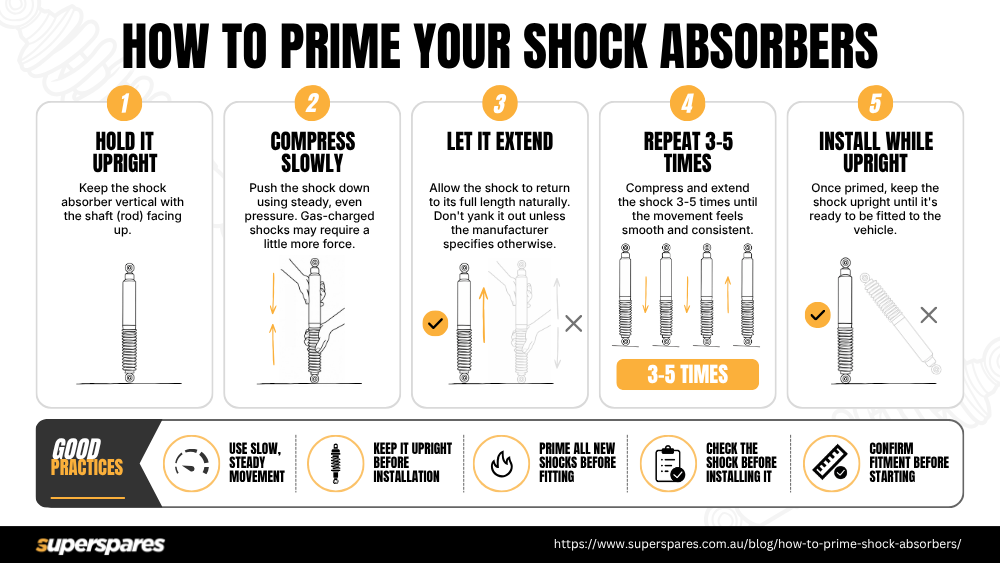
Before starting, keep the shock absorber upright in the same position it will sit once installed. Don’t rush the process, and avoid forcing the shock too quickly.
1. Hold the shock upright
Position the shock absorber vertically, with the rod or shaft facing upwards.
2. Compress the shock slowly
Push the shock down by hand in a controlled motion. It may take some effort, especially with gas-charged shocks.
3. Let it extend fully
Allow the shock to return to its full length. Don’t pull it out aggressively unless the shock design requires manual extension.
4. Repeat the process
Compress and extend the shock around 3 to 5 times, or until the movement feels smooth and consistent.
5. Keep it upright until installation
Once primed, avoid laying the shock flat again before fitting it.
What Should a Primed Shock Feel Like?
A properly primed shock absorber should move smoothly through its travel. The resistance should feel consistent, without sudden soft spots, dead zones, or jerky movement.
Some shocks will naturally feel firmer than others depending on their design. For example, a heavy-duty 4x4 shock may take more force to compress than a standard replacement shock for a passenger car.
The key thing is consistency. If one shock feels dramatically different from the other, it’s worth double-checking the part number, fitment, and condition before installation.
Common Mistakes to Avoid
Priming shock absorbers is straightforward, but there are a few things that can trip people up.
| Mistake | Better Approach |
|---|---|
| Compressing the shock too quickly | Use slow, steady movement |
| Laying the shock flat after priming | Keep it upright before installation |
| Only priming one shock | Prime all new shocks before fitting |
| Ignoring uneven movement | Check the shock before installing it |
| Using the wrong shock for the vehicle | Confirm fitment before starting |
Taking a few extra minutes here can save a fair bit of hassle once everything is bolted up.
When Should You Prime Shocks?
Prime shock absorbers just before installation. This is usually the best time because the shock can stay upright and go straight onto the vehicle after priming.
You should prime shocks when fitting:
- Standard replacement shock absorbers
- Gas-charged shocks
- Heavy-duty shocks
- Performance suspension upgrades
- 4x4 suspension components
This applies whether you’re working on a daily driver, a performance car, or a touring 4WD.
Ready to Fit Your New Shocks with Superspares?
Priming shock absorbers is a quick and easy step that helps new shocks perform properly from the start. By slowly compressing and extending the shock before installation, you can help restore smooth damping and avoid that uneven feel after fitment.
For replacement shocks, suspension parts, performance upgrades, and vehicle protection gear, Superspares is an Australian online auto parts store with options for passenger cars, performance vehicles, and 4x4s.

Written by Toby Martin
Automotive Content Specialist
FAQs
Do you need to prime new shock absorbers? +
Yes. It’s a good idea to prime new shock absorbers before installation, especially if they have been stored or transported on their side. Priming helps move the internal oil back through the valves and prepares the shock for proper use.
How many times should you compress a shock absorber when priming it? +
In most cases, compressing and extending the shock 3 to 5 times is enough. The movement should start to feel smooth and consistent before the shock is fitted.
Should shock absorbers be primed upright? +
Yes. Keep the shock absorber upright, with the rod or shaft facing upwards, while priming. After priming, try to keep it upright until it is installed.
What happens if you don’t prime shock absorbers? +
A shock that has not been primed may feel uneven, soft, or inconsistent at first. It may still settle after driving, but priming helps it perform properly from the start.
Should all types of shocks be primed? +
Priming is generally recommended for gas, hydraulic, heavy-duty, performance, and 4x4 shock absorbers. It’s a quick step that can help with smoother damping after installation.
What should a properly primed shock feel like? +
A properly primed shock should move smoothly through its travel, with consistent resistance. It should not feel jerky, loose, or have sudden soft spots.
When is the best time to prime shock absorbers? +
Prime shock absorbers just before installation. This helps keep them upright and ready to fit straight onto the vehicle.

