

What Your Car’s Exhaust Smoke Colour Is Telling You
Author: Toby Date Posted:15 August 2025
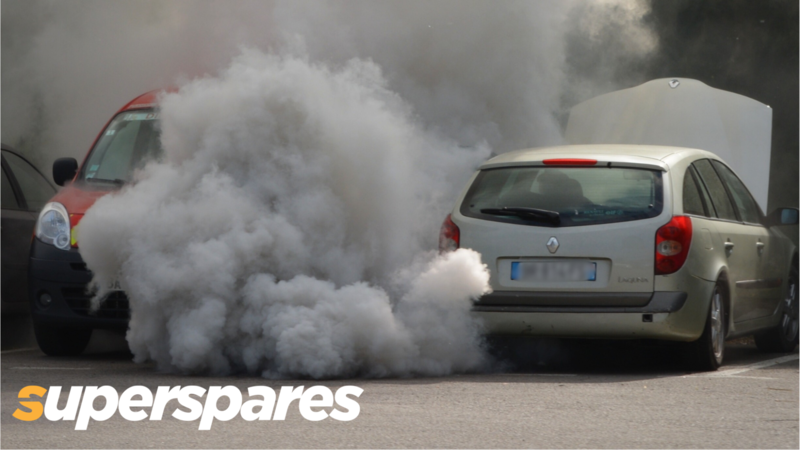

Not all exhaust smoke is created equal. From thin white vapour to thick black clouds, the colour of your car’s exhaust can reveal what’s going on under the bonnet — and spotting the warning signs early could save you from costly repairs. Understanding car smoke colour meanings help you diagnose issues faster, whether it’s burning oil, leaking coolant, or an engine running too rich.
Here’s how to identify them and what they might mean for your vehicle.
White Smoke from Exhaust – Cold Morning or Coolant Trouble
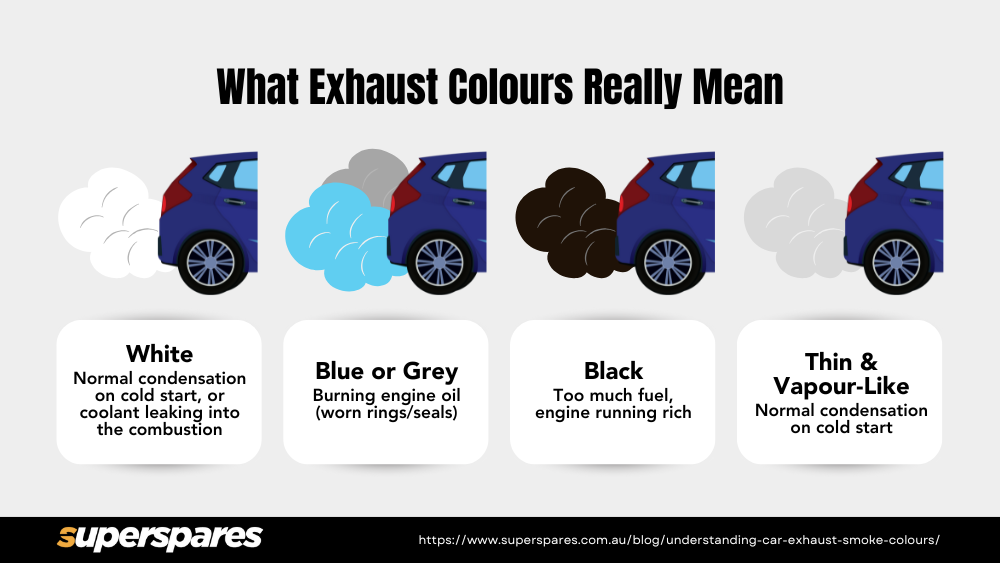
A little thin white smoke on a cold start is usually nothing to worry about — it's often just condensation burning off, especially during chilly mornings. But if that white smoke lingers after the engine has warmed up or becomes thick and persistent, it could signal a more serious problem — like a blown head gasket, cracked cylinder head, or damaged engine block. In these cases, coolant can leak into the combustion chamber, where it's burned along with the air-fuel mixture. Because coolant contains water and glycol, it vaporises when exposed to the high temperatures of combustion, producing thick, white smoke that exits through the exhaust. This isn’t just a visual concern — burning coolant can damage your catalytic converter and lead to major engine trouble if ignored.
Watch for signs such as constant white smoke after warm-up, engine overheating, or a milky residue under the oil cap. That milky buildup forms when coolant leaks into the engine oil — usually from a blown head gasket — causing the two fluids to mix and create a light, sludge-like film.
If you suspect an issue, it’s worth checking your radiator, coolant levels, and the condition of the head gasket.
Blue or Grey Smoke from Exhaust – Burning Oil
We’re not talking Cookie Monster blue here — think thin, hazy smoke with a bluish-grey tint trailing from your exhaust. If you’re spotting this, chances are your engine is burning oil. Inside your engine, oil is meant to lubricate moving parts like pistons, valves, and the turbocharger. But when components like piston rings or valve seals wear out, oil can sneak past them and enter the combustion chamber — the space where the air–fuel mix is ignited to power the engine.
Now, oil isn’t meant to burn with fuel. So when it does, it burns improperly, creating that bluish or greyish smoke you see puffing out the exhaust. The colour comes from the nature of burning hydrocarbons in the oil — thicker, slower to vaporise, and leaving a visible oily residue as smoke.
Here’s a quick comparison for context:
- Petrol burns clean and mostly invisible (when all’s working properly).
- Oil burns thick and bluish — like when you accidentally drip some onto a hot surface and it smokes.
So in short, blue or grey exhaust smoke means your engine is combusting more than just fuel — it’s cooking oil too, and that’s always a sign something’s leaking inside.
Black Smoke from Exhaust – Too Much Fuel
Seeing black smoke puff out of your exhaust? That’s your engine telling you it’s burning more fuel than it should. The dark colour comes from unburnt fuel particles — basically, the engine isn’t getting enough air to burn the fuel cleanly. This imbalance, known as running “rich,” can be caused by a clogged air filter, stuck fuel injectors, a faulty oxygen or mass airflow sensor, or even an issue with the fuel pressure regulator. You might also notice a strong petrol smell, sluggish performance, or your fuel economy nosediving.
For diesel vehicles, a quick burst of black smoke under load is normal — but steady clouds are a sign it’s time to check your air-fuel mix.
Thin, Vapour-Like Smoke from Exhaust – Just Condensation
If the smoke disappears quickly and only shows up when you first start the car, it’s probably just water vapour from condensation — totally normal, especially in cooler weather.
But if it's mixed with other colours or smells sweet, it could still be worth a second look.
Other Signs to Watch
While exhaust smoke colour gives away a lot about what’s happening inside the engine, don’t overlook what’s happening underneath your vehicle either. Leaking fluids can be just as telling. Since we’re already talking about colours, it’s worth checking out our related article on the colour of car fluid leaks meaning — a handy guide to identifying fluid leaks by their colour and consistency. Whether it’s oil, coolant, brake fluid or something else dripping onto your driveway, spotting these signs early can help you get ahead of mechanical issues before they snowball into costly repairs.
Keep Your Car Running Clean with Superspares
Whatever colour’s coming out of your tailpipe, diagnosing early can save you big on repairs down the track. Whether you need new gaskets, sensors, oil catch cans, engine additives, or any other car service essentials, Superspares has you sorted.
As your trusted auto parts online store, we stock the gear you need to keep your engine breathing clean. Shop online today with fast Aussie-wide delivery.

