

E10 Fuel Guide
Author: Toby Date Posted:18 September 2026
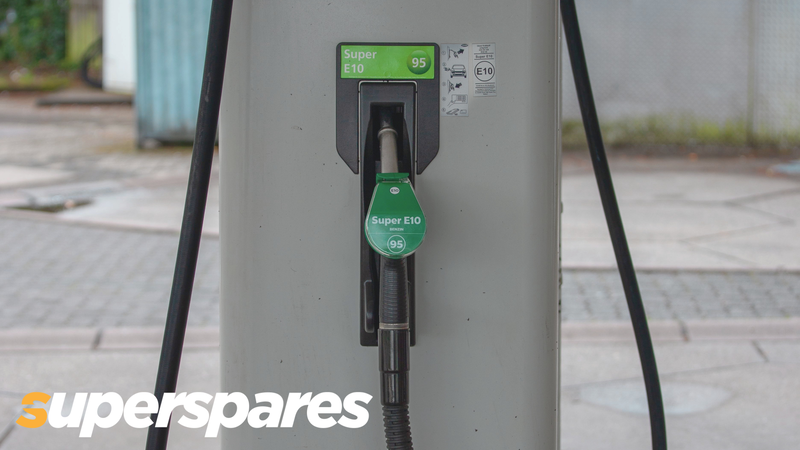

Pull into a servo and E10 is often one of the cheaper options at the pump. But before reaching for it, there are a few things worth knowing.
A few cents less per litre sounds pretty good, but fuel isn't something you want to choose on price alone. Let's look at what E10 actually means for your car, your fuel bill and even the environment.
Key Takeaways
- E10 contains up to 10% ethanol and is commonly sold as 94 RON petrol in Australia.
- Most petrol cars built from 2000 onwards can use E10, but you should always check your vehicle's specific fuel requirements.
- E10 is generally safe for compatible vehicles, while some older cars may have fuel-system components that aren't suitable for ethanol.
- Fuel consumption may be around 3% higher because E10 contains slightly less energy than 91 RON petrol.
- E10 offers environmental benefits by using renewable ethanol that can be produced from agricultural products and by-products.
- E10 isn't a replacement for premium petrol if your vehicle specifically requires 95 or 98 RON.
What Is E10 Fuel?
E10 is unleaded petrol containing up to 10% ethanol and around 90% petrol. The name simply means “E” for ethanol and “10” for the maximum 10% ethanol content. Ethanol is an alcohol-based fuel commonly produced from crops such as wheat and sugar cane.
At service stations, you'll see petrol labelled with numbers such as 91, 95 and 98. These numbers refer to the fuel's Research Octane Number (RON), which is simply a measure of how well the fuel resists engine knock, or unwanted combustion inside the engine.
Generally, a higher RON number means greater resistance to engine knock. It doesn't necessarily mean the fuel contains more energy, gives you more power, or is automatically better for your car.
Regular unleaded petrol is commonly 91 RON, while E10 sold in Australia is generally 94 RON. This is why you may see E10 labelled as 94 at the petrol station.
The important part is to use the fuel recommended for your particular vehicle. Even though E10 has a higher octane rating than 91 RON petrol, your car still needs to be compatible with ethanol-blended fuel.
Is E10 Better for the Environment?
Ethanol can be made from agricultural products and by-products such as waste wheat starch and sugar molasses. That puts more of what agriculture produces to use while reducing our reliance on fossil fuels. That’s a lot of wins for the environment if you ask me.
There's a climate benefit too. Australian-produced ethanol can generate around 50% or more fewer lifecycle greenhouse gas emissions than petrol, depending on production. E10's overall reduction is smaller because it contains only up to 10% ethanol, but every little bit of petrol replaced by a renewable fuel counts.
Can Your Car Use E10?
As a general guide, most petrol cars built from 2000 onwards are compatible with E10, although there are exceptions depending on the manufacturer, model and engine.
Car models that may be E10-compatible:
- Toyota Camry: many petrol models from 1986 onwards
- Ford Falcon: petrol models from 2000 onwards
- Mazda3: petrol models from 2004 onwards
- Hyundai i30: petrol models from 2007 onwards
If your car was built before 2000, take extra care before filling up with E10. Regardless of age, always check your owner's manual, fuel flap or manufacturer's recommendations to confirm compatibility.
Does E10 Affect Your Car's Fuel System?
If your car is designed for E10, it shouldn't cause problems for the fuel system. Concerns are mainly with older or incompatible vehicles, where ethanol may affect certain fuel hoses, seals and gaskets over time.
Some older versions of popular models, such as the Holden Commodore, Ford Falcon, Toyota Corolla and Nissan Patrol, may not be suitable for E10 depending on the model year and engine.
For older, classic or modified cars, always check the manufacturer's fuel requirements before using E10 and make sure replacement fuel-system components are compatible with ethanol-blended petrol.
Does E10 Affect Engine Performance?
In an E10-compatible vehicle, you generally shouldn't expect a noticeable change in normal performance or drivability simply because you're using E10.
There is, however, an important difference between octane rating and energy content. Australian E10 is typically 94 RON, but ethanol contains less energy per volume than petrol. As a result, E10 has around 3% less energy than the equivalent amount of 91 RON petrol, which can translate to an average increase in fuel consumption of around 3%.
E10 vs 91 vs 95 vs 98
The numbers displayed at the bowser refer to the fuel's Research Octane Number (RON).
| Fuel | Typical RON | What to Know |
|---|---|---|
| Regular unleaded | 91 | Standard petrol for vehicles designed for 91 RON |
| E10 | 94 | Contains up to 10% ethanol |
| Premium unleaded | 95 | Higher-octane premium petrol |
| Premium unleaded | 98 | Higher-octane fuel used or recommended by some vehicles |
If your manufacturer specifies 95 or 98 RON, don't substitute E10 simply because 94 RON looks close enough. Use fuel that meets or exceeds the manufacturer's stated requirements.
This is especially important for performance vehicles and engines designed around higher-octane petrol.
What Happens If You Put E10 in an Incompatible Car?
One wrong fill-up doesn't necessarily mean immediate engine trouble, but it's not something you want to repeat.
Regular use of E10 in an incompatible vehicle can affect fuel-system components over time. If you've filled up by mistake, check your owner's manual or speak with a qualified mechanic before deciding what to do next.
Is E10 Better Value?
E10 can sometimes be cheaper per litre than other petrol grades, but pump price isn't the only factor to consider. So, while the savings aren't always as big as they first appear, at least E10 comes with the added environmental benefits.
Looking After Your Fuel System
Regardless of the petrol you use, keeping your vehicle properly maintained can help support reliable fuel delivery and engine performance.
Pay attention to symptoms such as difficult starting, hesitation, rough running, unusual fuel smells, visible leaks or declining fuel economy. These symptoms can have many causes, but components such as the fuel filter, fuel pump, injectors, hoses and seals may need inspection as part of diagnosing a fuel-system problem.
Never ignore a suspected fuel leak. Petrol is highly flammable, so leaks should be inspected and repaired promptly.
Choose the Right Fuel and Keep Your Car Maintained
E10 can be a perfectly suitable everyday fuel for vehicles designed to use it. The key is checking compatibility rather than choosing fuel based solely on price or the number displayed at the bowser.
Follow your vehicle manufacturer's recommended fuel grade and keep up with routine maintenance, particularly if your car is older or you're experiencing fuel-system problems.
When it's time for servicing or repairs, Superspares is an auto parts online shop offering fuel filters, pumps, engine components, service parts, performance upgrades and other automotive products for passenger cars, performance vehicles and 4WDs. Keeping the right parts in good condition is just as important as putting the right fuel in the tank.

Written by Toby Martin
Automotive Content Specialist
FAQs
Is E10 the same as regular unleaded petrol? +
No. Regular unleaded petrol is typically 91 RON, while E10 contains up to 10% ethanol and is commonly rated at 94 RON in Australia.
How do I know if my car can use E10? +
Check your owner's manual, fuel flap or vehicle manufacturer's recommendations. Most petrol cars built from 2000 onwards are compatible with E10, but there are exceptions, so it's always worth checking your specific model and engine.
Can You Mix E10 and Unleaded? +
Yes, E10 and regular unleaded petrol can generally be mixed in the same tank if your vehicle is approved to use both. For example, topping up a tank containing E10 with 91 unleaded shouldn't be a problem in a compatible car.
Just remember that if your vehicle requires 95 or 98 RON premium petrol, adding E10 may lower the overall octane rating below what the manufacturer recommends.
Can I use E10 instead of 91 unleaded? +
If your vehicle is approved for E10, generally yes. However, being able to use 91 RON petrol doesn't automatically mean your vehicle is compatible with ethanol, particularly with older cars.
Can I use E10 instead of 95 or 98 petrol? +
Not unless your vehicle manufacturer specifically approves it. E10 is commonly 94 RON, so it doesn't meet a requirement for 95 or 98 RON simply because the numbers are close.
Will E10 damage my engine? +
E10 shouldn't damage a vehicle designed to use it. Problems are more likely with incompatible vehicles, particularly older cars with fuel-system hoses, seals or other components that weren't designed for ethanol blends.
What should I do if I accidentally put E10 in the wrong car? +
One accidental fill doesn't necessarily mean immediate damage. Check your owner's manual or contact your vehicle manufacturer or a qualified mechanic for advice specific to your car before deciding what to do next.
Is E10 cheaper than regular petrol? +
E10 is often priced lower at the bowser, but your car may use slightly more of it because of its lower energy content. The actual value therefore depends on the price difference, your vehicle and its fuel economy.
Is E10 better for the environment? +
E10 replaces a portion of fossil-based petrol with renewable ethanol, which can be produced from agricultural products and by-products. This can give E10 a lower overall carbon footprint than conventional petrol.

