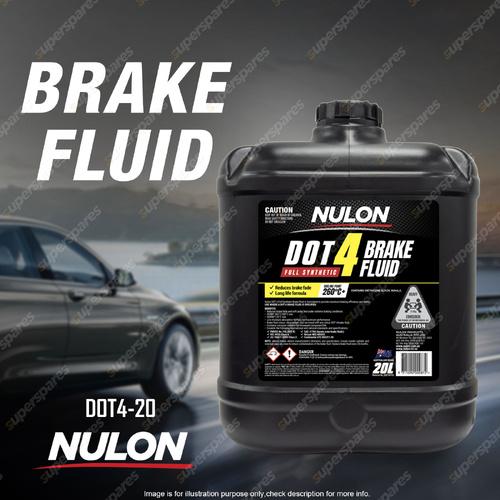
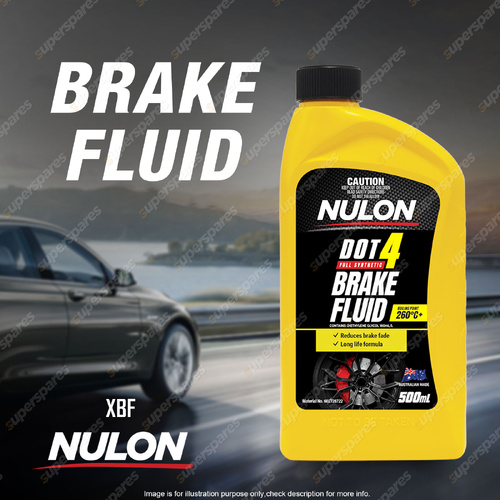
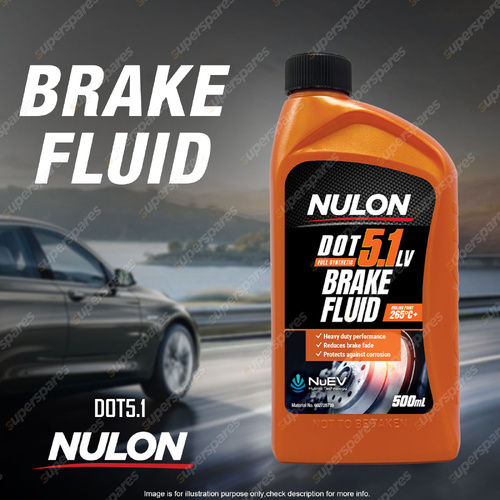
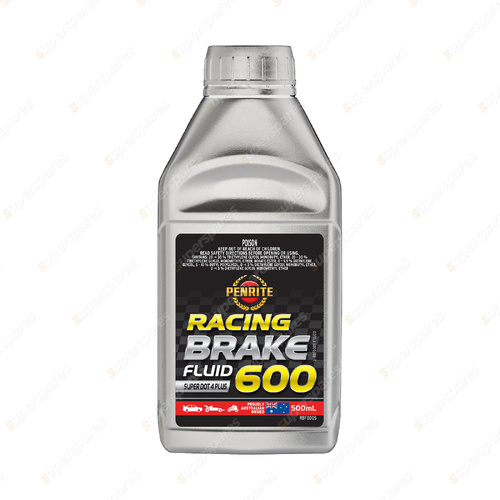
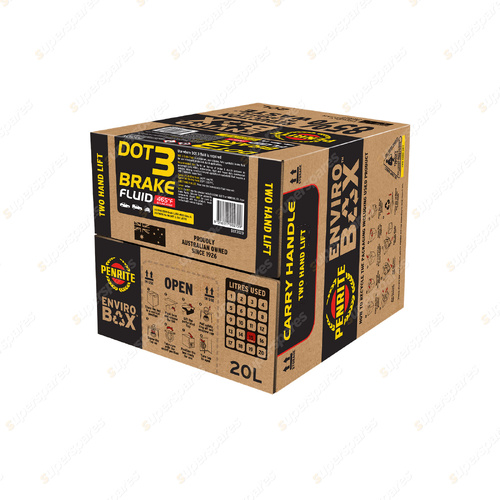
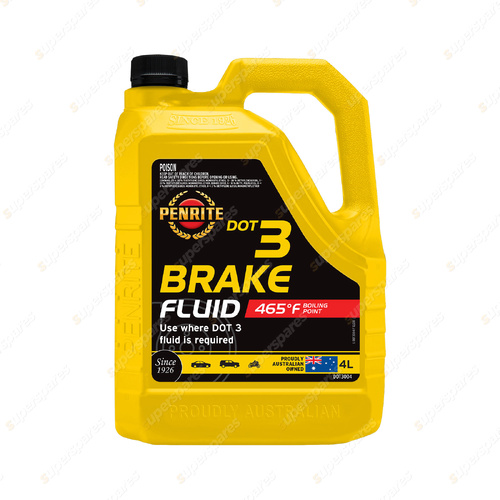
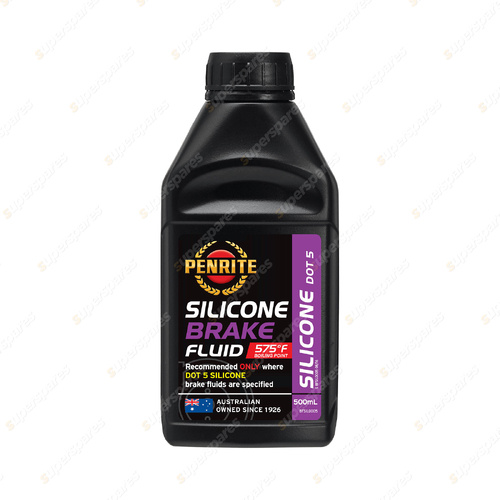
Keeping your brakes working like a charm starts with the right brake fluids. At Superspares, we stock trusted brands like Bendix, CRC, and Nulon, offering top-quality DOT 3 and DOT 4 brake fluids that keep your braking system responsive and safe. Our brake fluids ensure responsive braking in models like the Ford Falcon, Jeep Grand Cherokee, Hyundai i30, and Honda CR-V. So whether you're cruising around town or taking on tougher roads, having fresh brake fluid is key to smooth stopping and overall performance.
Plus, we’ve got you covered with free shipping on orders over $99 and a click-and-collect option. Get the best for your car with Superspares!
Keep Your Brakes in Check
Your brakes are the most important safety feature in your car, and making sure you’ve got the right brake fluid is a must. Whether you’re running on DOT 3 or DOT 4 brake fluid, you want it to be fresh and high-quality to keep things running smoothly.
That’s where Superspares comes in. We stock brands you can trust like Bendix, CRC, and Nulon. These are the go-to choices for drivers who want top-notch performance.
Why Brake Fluids Matter
Brake fluid isn’t something you want to forget about. Over time, it absorbs moisture, and that means it loses its effectiveness. Let it go too long, and your brakes won’t work like they should, putting you and your car at risk. Replacing your brake fluid regularly is one of the simplest ways to avoid bigger problems down the line. Keep an eye on it, and swap it out when it’s looking tired!
We’ve Got You Covered
At Superspares, we make it easy to keep your car in top condition. With free shipping on orders over $99, a fitment guarantee, and a national warranty, we’ve got everything you need to keep your vehicle safe and sound. Whether it’s DOT 3, DOT 4 brake fluids, or other key essentials, you’ll find exactly what you need here.
Take care of your car’s brakes with ease—shop now at Superspares and drive with confidence!
FAQs
What is brake fluid and what does it do?
Brake fluid is a hydraulic fluid that transfers the force from your foot on the brake pedal through the master cylinder and lines to each wheel's caliper or drum, clamping the pads or shoes against the rotors or drums. Because braking generates intense heat (rotors can exceed 400 degrees C in hard use), brake fluid is engineered with a high boiling point and precise viscosity. It also lubricates internal seals and prevents corrosion in the hydraulic system. Without clean, correctly specified brake fluid, braking performance drops dramatically and safety is compromised.
How often should brake fluid be replaced?
Most manufacturers recommend flushing and replacing brake fluid every 2 years or 40,000 km, regardless of mileage. Brake fluid is hygroscopic, meaning it absorbs moisture from the atmosphere, and water content as low as 3% can drastically lower its boiling point and cause corrosion inside calipers and ABS modules. In Australia's humid coastal climates, the 2-year interval is particularly important. A brake fluid test strip or electronic tester can confirm moisture content. A professional brake fluid flush typically costs $80-$200 and is one of the cheapest, most important safety services.
What's the difference between DOT 3, DOT 4, DOT 5, and DOT 5.1?
DOT 3 is a glycol-based fluid with a dry boiling point around 205 degrees C, suitable for older vehicles and light-duty use. DOT 4 (dry boiling point around 230 degrees C) is the most common modern specification and is used in most passenger cars and 4WDs. DOT 5.1 is a higher-performance glycol fluid (dry boiling point around 260 degrees C) favoured for towing, performance driving, and track use. DOT 5 is a silicone-based fluid — completely different chemistry — and should never be mixed with glycol-based fluids. When in doubt, always follow the specification printed on the master cylinder cap.
Can I mix different brands or grades of brake fluid?
DOT 3, DOT 4, and DOT 5.1 are all glycol-based and are generally chemically compatible, so mixing brands (e.g.
Penrite,
Nulon, and
Bendix) is usually safe in an emergency top-up. However, you should always top up with a fluid that meets or exceeds the specification on the master cylinder cap — going from DOT 4 to DOT 5.1 is fine, but DOT 3 to DOT 4 or higher is only acceptable if the system was DOT 3. Never mix DOT 5 (silicone) with any glycol-based fluid — it will cause seal damage and brake failure. For a full flush, always use a single fresh product.
How much does brake fluid cost in Australia?
A 500 ml bottle of standard DOT 4 from brands like
Penrite,
Nulon, or
Bendix typically costs $15-$30. Premium racing-grade fluids such as
Penrite Super DOT 4 and
Bendix DOT 5.1 generally range from $35 to $100 per 500 ml. Most passenger car systems hold 0.5-1.0 litres of fluid, while larger 4WDs and vehicles with complex ABS/ESC systems can hold 1.5 litres or more. A complete professional flush, including labour and fluid, generally costs $80-$200.
What are the signs of bad or low brake fluid?
Common signs include a soft or spongy brake pedal, a pedal that slowly sinks under constant pressure, brake warning lights, reduced braking performance (especially after repeated hard stops, known as brake fade), dark or murky fluid in the reservoir, and moisture-related corrosion around the caliper bleed nipples. Fresh brake fluid should be clear and pale amber. Dark brown or black fluid indicates contamination with water, rust particles, or seal wear, and should be flushed immediately. Never ignore a low brake fluid warning — it can indicate either worn pads or a hydraulic leak.
Can I change brake fluid myself?
Yes, though it requires care. You'll need fresh fluid of the correct specification, a clear hose, a catch bottle, a spanner for the bleed nipples, and ideally a vacuum bleeder or a helper to pump the pedal. The standard process is to open one bleed nipple at a time — starting with the wheel furthest from the master cylinder — and flush fluid through until clean, new fluid runs out, while continuously topping up the reservoir so it never runs dry. Modern vehicles with ABS may require a scan tool to cycle the ABS module properly. If in doubt, leave it to a workshop.